From the idea to the finished film
We have always seen it as a great challenge to build bridges with our films – between continents, cultures and people with all their different ideas
Idea
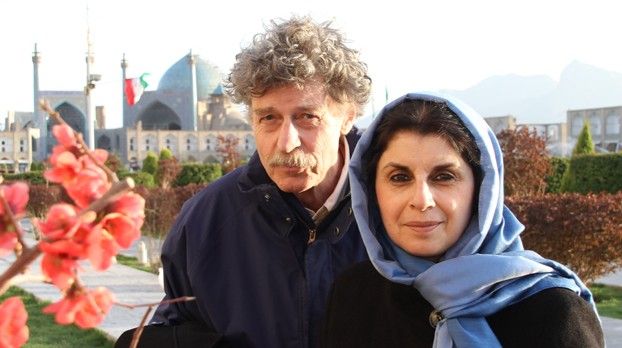
The ideas for our films come from two cultural worlds. Faranak Djalali-Lorenz, born in Iran, and Rüdiger Lorenz have been working on projects together since 1990.
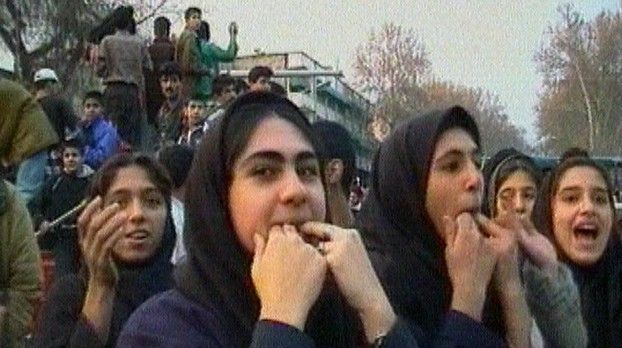
Scene from the film “Jenseits des Spiegels” (Beyond the Mirror), Tehran during the Football World Cup In a world increasingly shaped by the confrontation of cultures, it is becoming ever more important to approach subjects from many angles. Looking at things from East and West at the same time gives us the chance to see behind doors that would otherwise stay closed, and to understand connections differently than a visitor who is only passing through could.
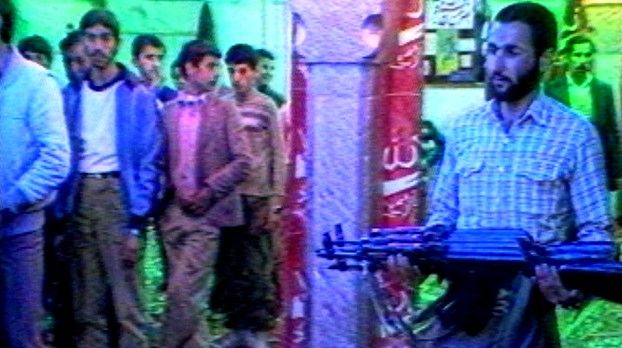
Training of young people in a mosque in Iran during the Gulf War Portraying people’s world from their own point of view and taking the viewer there sometimes leads to films that leave the usual clichés behind, because they deliberately give up distance.
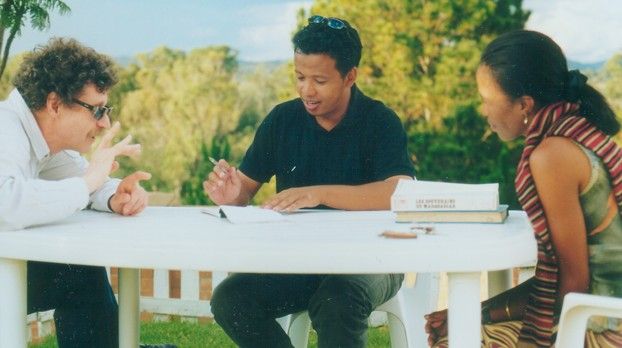
Director’s meeting: the film “Ambohimanga” about the city of kings was made in Madagascar Involving local people in the creative process and being open to discussing the substance of a film can build bridges. Crossing them – questioning one’s own way of thinking – can sometimes feel like walking a tightrope.
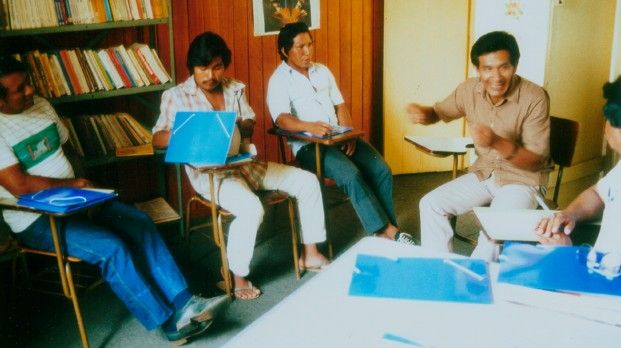
Talking with founding members of the Indigenous University in Cuiabá, Brazil Research
Whether in Asia, Africa, South America, the Orient or the Occident, we have learned a great deal from the people of these countries, both in preparing and in carrying out projects on location. They showed us the way and led us to places and goals we would never have reached without them.
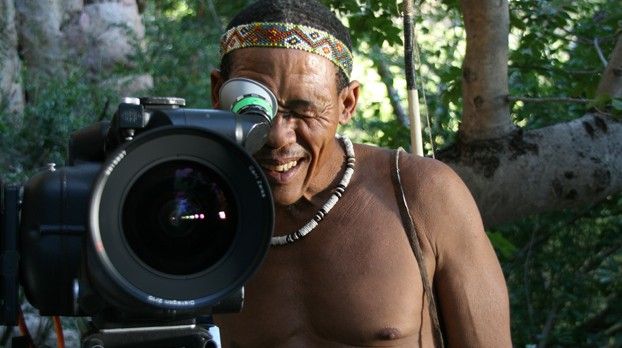
A San man at the 35 mm camera during filming of “Tsodilo – the Hills of the Stone Python”, Botswana Having time to engage with their stories and the rhythm of their lives was perhaps the most important experience of all. Along the way, warm friendships have grown on every one of these continents – friendships that help us again and again in realising new projects.
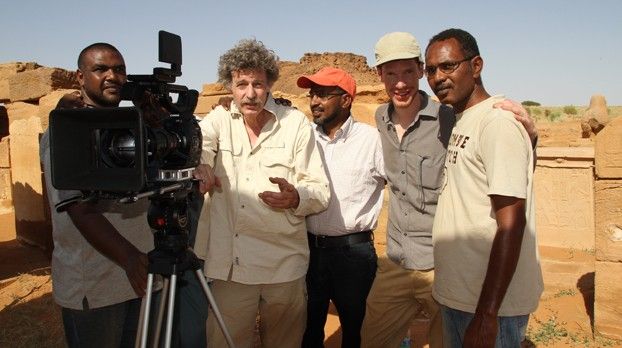
Our film crew in Meroe, Sudan Script
The first draft of a script may well be written right where things “happen”. Sometimes we simply cannot resist the chance to consult people on the spot, to experience settings again and again, to place them in new contexts and to see them in a different light.
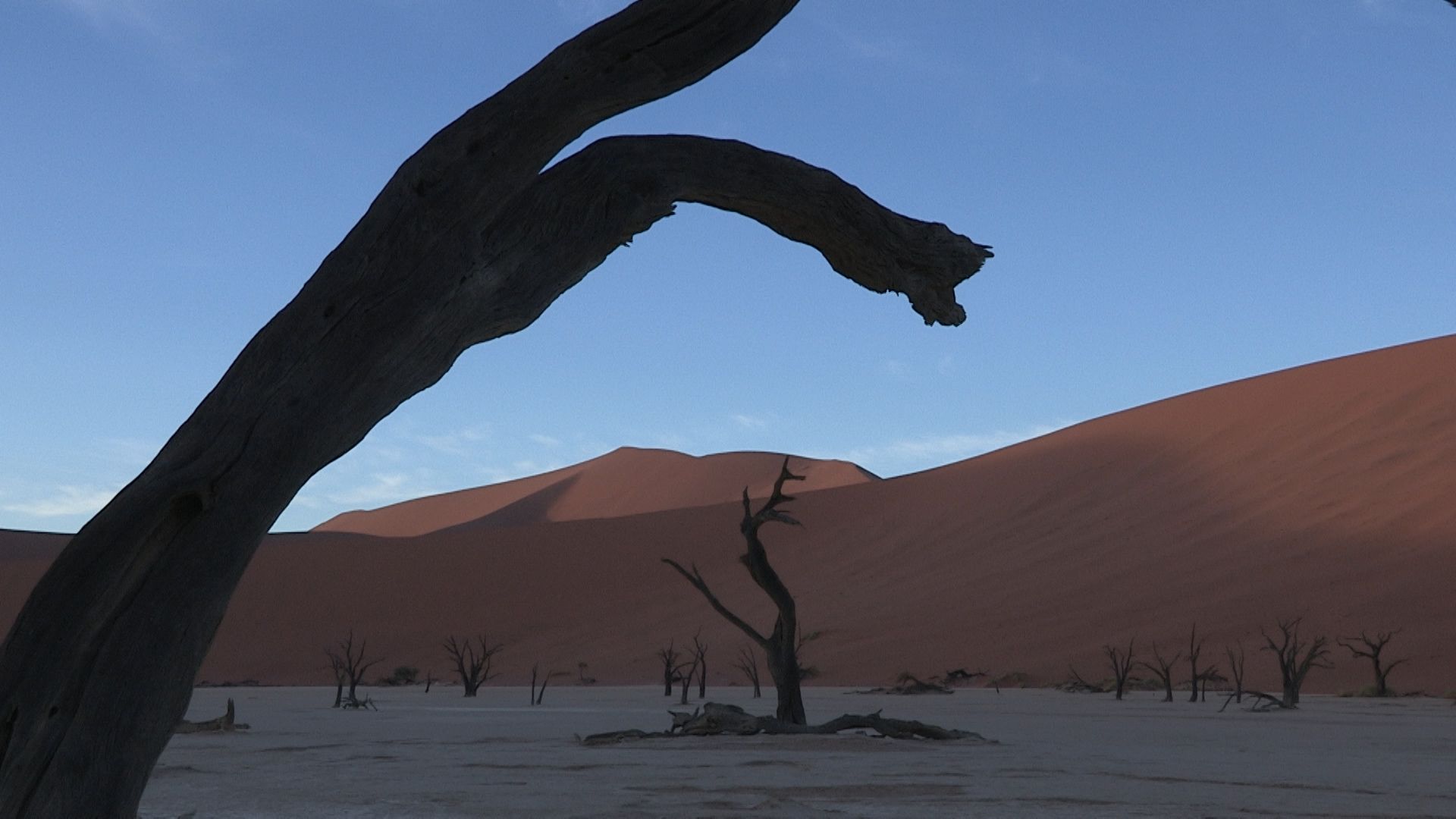
Scene from “Die Namib – the Place Where There Is Nothing” Sitting at the computer at home, working with experts and institutions, and drawing on our own archive of thousands of photos, video tapes and film reels – that is the other side of writing.
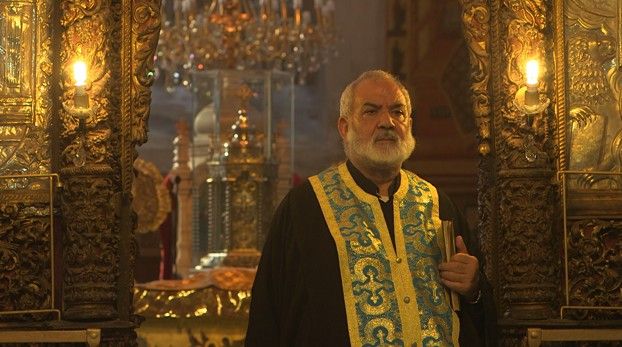
From the film “Bethlehem – Between Walls and Mass Tourism” Last but not least, the script also develops in collaboration with an editorial team that shares our enthusiasm for a subject or a new series.
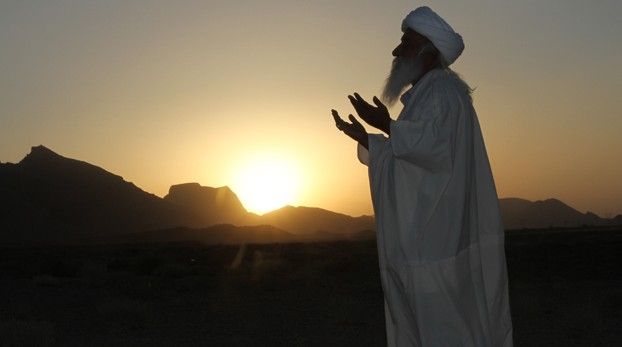
From “Treasures of the World – Heritage of Mankind”: “The Friday Mosque” Production
Where the production of a compelling documentary begins, we have usually left well-trodden paths far behind. Making sure that even demanding 35 mm film technology or digital equipment can play to its strengths under such conditions calls for the highest professionalism from the team.
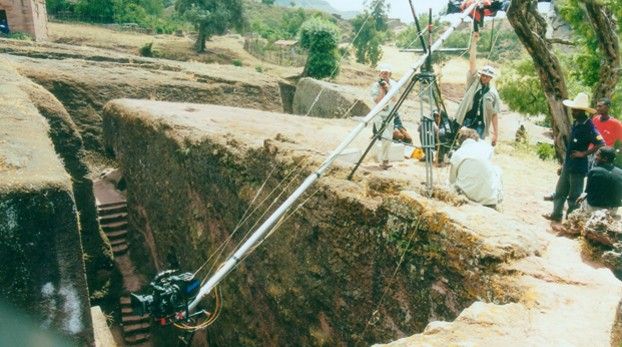
35 mm Arri on a crane – the only way to reveal the scale of the rock-hewn churches of Lalibela, Ethiopia Now it is a matter of fulfilling our own standards and those of our commissioning broadcasters one hundred percent. Being largely self-sufficient in terms of equipment gives us additional security.
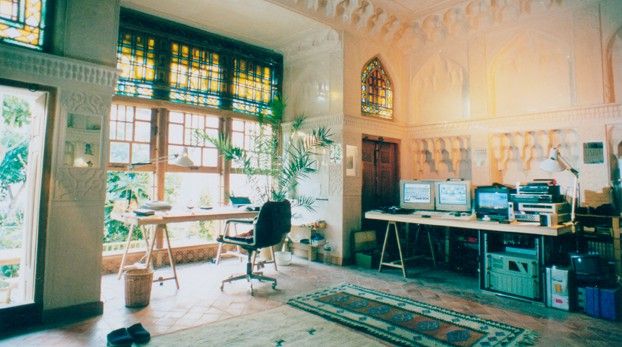
Mobile editing suite in a 500-year-old house in Isfahan Editing on location is perhaps the ideal case. In our studio in Isfahan – sadly only for half a year – three films were made. The music was written by a local composer.
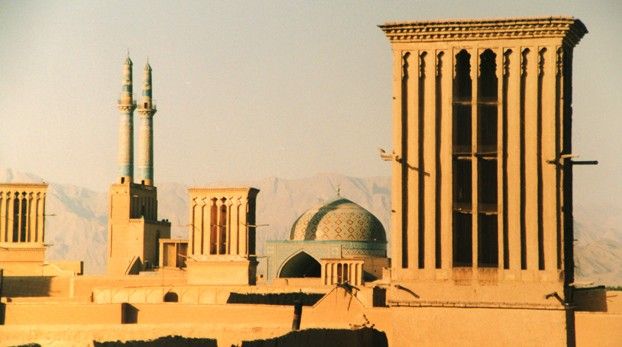
Above the rooftops of the oasis city of Yazd. From the film “Der Windturmbauer” (The Wind Tower Builder)